

Caring for gemstone jewelry starts with one question: what is the stone, and has it been treated? Different gemstones respond differently to impact, water, heat, light and chemicals. A sapphire ring and a turquoise pendant may both be suitable for regular wear, but they should not be handled in exactly the same way.
For most pieces, the safest everyday routine is simple: put jewelry on after cosmetics have dried, remove it before strenuous or chemical-heavy activities, handle it by the metal rather than the stone, wipe it gently after wear, and check the setting regularly. When the gemstone or treatment is unknown, use the most conservative method and ask a qualified jeweler before cleaning.
Care begins with the gemstone, not a universal rule
“Gemstone” describes a wide range of natural and laboratory-grown materials. Their care needs depend on more than a position on the Mohs scale:
- Hardness describes resistance to scratches and abrasion.
- Toughness describes resistance to breaking, chipping and cracking.
- Stability describes how a material responds to heat, light, chemicals and changes in temperature or humidity.
A hard stone is not automatically immune to damage. Sapphire resists scratches well, yet a sharp impact can still damage a stone or its setting. Moonstone is softer and has cleavage directions that make it more vulnerable to a knock. An emerald may be reasonably hard but contain surface-reaching fractures, often filled with oil or resin, which changes how it should be cleaned and repaired.
Know the main care differences
| Gemstone or material | Everyday care point |
|---|---|
| Sapphire | Highly scratch-resistant and generally durable, but protect facet edges, pointed shapes and settings from hard blows. |
| Garnet | Suitable for many jewelry styles; avoid rough impact, and treat fractured or fracture-filled stones more cautiously. |
| Quartz, including amethyst | Reasonably durable, but harder stones can scratch it. Prolonged intense light may fade some amethyst, and sudden heat changes can cause damage. |
| Moonstone | More vulnerable to impact because of its cleavage and poor toughness. Rings need particular care around hard surfaces. |
| Emerald | Commonly fractured and often filled with oil or resin. Avoid heat, harsh chemicals, ultrasonic cleaning and steam. |
| Opal | Can scratch or fracture more readily than many familiar gems. Protect it from high heat, sudden temperature change and very dry conditions. |
| Turquoise | Often porous or treated. Cosmetics, perspiration, oils, heat and solvents can affect its surface or colour. |
| Pearl | A soft organic gem material that needs especially gentle handling. Follow our guide to caring for pearl jewelry rather than applying general gemstone advice. |
These are starting points, not a substitute for identifying a particular stone and treatment. A fracture-filled sapphire, coated quartz or stabilized turquoise may need different care from an untreated example of the same gem family.
Build safer habits before putting jewelry on
Finish applying perfume, hairspray, lotion, sunscreen and makeup before you put on gemstone jewelry. Let products dry first. This matters especially for porous stones, surface coatings, fracture fillers, adhesives and plated components, but it is a sensible habit for any finished piece.
Look at the jewelry briefly before wearing it:
- Is a stone moving, tilting or rattling?
- Is a prong lifted, worn or catching on fabric?
- Is a bead string stretched or frayed?
- Is there a fresh chip, crack or cloudy area?
- Is adhesive visible around a cabochon or inlay?
If something has changed, set the piece aside. Continuing to wear it can turn a small repair into a lost stone.
Match the jewelry to the day
Remove gemstone jewelry before exercise, gardening, DIY work, moving heavy objects or other activities that involve impact, pressure or repeated abrasion. Household cleaning also combines several risks: chemicals, hard surfaces and snagging.
Where a piece is worn matters. Rings and bracelets meet desks, door handles and work surfaces more often than earrings and pendants. A delicate moonstone, opal or emerald may be more practical in a pendant than in a ring worn through a busy day. Protective settings can help, but they do not make a stone indestructible.
Take jewelry off before sleeping. Chains can kink, prongs can catch, and rings or earrings can be pressed against hard fittings without you noticing.
Can gemstone jewelry get wet?
There is no single answer for every gemstone or construction. Brief contact with clean water may be harmless for some untreated, securely set stones, but soaking can affect porous gems, dyes, coatings, fracture fillers, adhesives, stringing materials and some metals.
Remove gemstone jewelry before showering, swimming, washing dishes or entering a hot tub. Chlorine, salt, soaps and repeated moisture can create risks beyond the stone itself. If a piece gets splashed, blot it with a soft cloth and let it dry naturally. Do not use heat to speed drying.
If you do not know whether a stone is treated, dyed, glued or porous, assume that repeated water exposure is not appropriate.
Protect sensitive stones from heat and strong light
Do not leave gemstone jewelry on a sunny windowsill, near a radiator or in a hot car. High heat and sudden temperature changes can extend existing fractures or affect fillers and adhesives. Opal and moonstone are among the materials that need particular care around thermal shock.
Some colours can also change after prolonged exposure to intense light. Certain amethysts may fade, for example. Normal wear is not the same as leaving a piece in strong display light day after day; the aim is to avoid unnecessary, extended exposure.
Treatments can change the care instructions
Many accepted gemstone treatments improve colour, clarity, surface appearance or durability. A treated gemstone is not necessarily poor quality, but the treatment may be more sensitive than the stone beneath it.
- Fracture fillers may be affected by heat, solvents, steam or ultrasonic vibration.
- Dyes may be vulnerable to chemicals, prolonged moisture or fading.
- Surface coatings can scratch or wear at facet edges and should not be rubbed with abrasive materials.
- Impregnation or stabilization may improve a porous material but can still require protection from heat and solvents.
- Adhesives used in assembled stones, inlay or settings may weaken with soaking or chemical exposure.
Keep any sales receipt, treatment disclosure or laboratory report with your records. Share that information with a jeweler before professional cleaning or repair.
Use a conservative approach to home cleaning
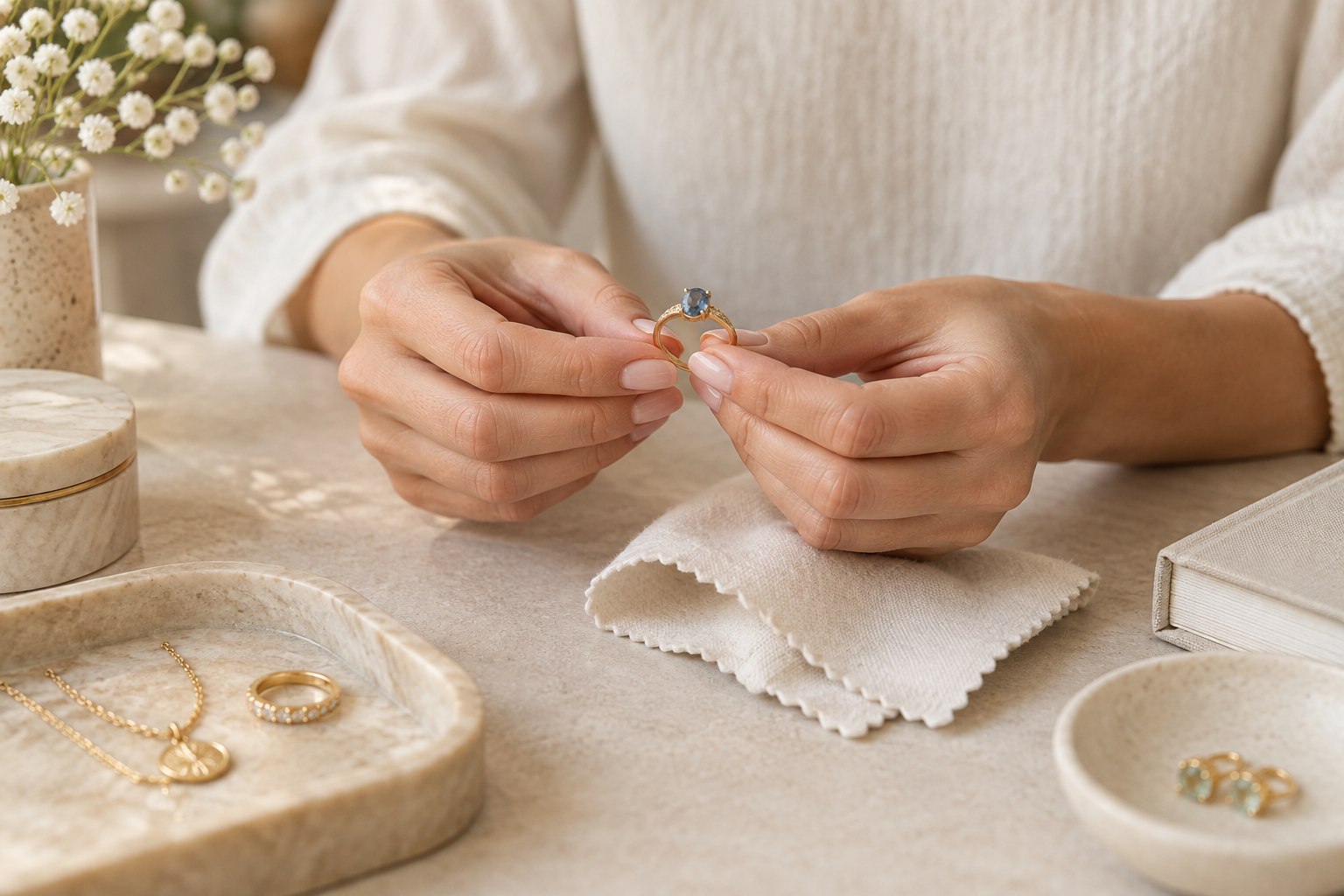
Everyday care does not require frequent deep cleaning. Begin with a clean, soft, lint-free cloth. If more is needed and you know the gemstone and treatment, follow care guidance specific to that material and the construction of the piece.
Do not assume that an ultrasonic cleaner, steam cleaner or commercial jewelry dip is safe because the label says “for jewelry.” Ultrasonic vibration can worsen fractures or loosen stones, while steam and chemicals can affect heat-sensitive gems, fillers, coatings and glue. Toothpaste, baking soda and abrasive powders can scratch stones and metal.
When identity or treatment is uncertain, do not experiment. A jeweler or gemologist can help identify an appropriate method.
Pay attention to settings, thread and glue
The gemstone is only one part of a piece. Prongs can wear, bezels can loosen, thread can stretch and glued components can shift. Check raised settings and frequently worn rings more often because they receive more contact.
Hold earrings and pendants by their metal findings where possible instead of pulling on the stone. Do not push a loose stone back into place or add household glue. A professional can inspect the setting without masking the underlying problem.
What to do after wearing gemstone jewelry
- Remove the piece before changing clothes if it may catch on fabric.
- Handle it over a clear, soft surface.
- Wipe away visible perspiration or cosmetic residue with a clean soft cloth.
- Let any accidental moisture dry naturally.
- Check the clasp, prongs, thread or adhesive points.
- Place the piece in its own protected space.
Separate storage prevents harder stones, metal edges and earring posts from scratching softer materials. Our guide to storing gemstone jewelry safely covers containers, separation, light, moisture and travel in detail.
When professional help is the safer choice
Ask a qualified jeweler or gemologist for advice when the stone is unidentified, the treatment is unknown, the piece is valuable or sentimental, or you notice movement, a chip, a widening fracture or a damaged setting. Professional inspection is also wise before cleaning antique jewelry or a piece that combines several sensitive materials.
A repairer needs to know about treatments before applying heat, chemicals, steam or ultrasonic cleaning. If you have documentation, bring it with the jewelry.
For more material-specific routines as the library grows, visit our Jewelry Care Guide.
Frequently asked questions
Can I use the same care routine for every gemstone?
No. Hardness, toughness, stability, porosity, treatments and construction all affect care. When you do not know the stone or treatment, use a soft cloth, avoid soaking and chemicals, and seek professional advice before deeper cleaning.
Which gemstone jewelry is best for everyday wear?
Durable stones in protective settings are generally more forgiving, but lifestyle and jewelry type matter. A ring receives more impact than a pendant. Even sapphire can be damaged by a hard blow or lost from a worn setting.
Can hand sanitiser damage gemstone jewelry?
It can affect some porous stones, coatings, fillers, adhesives and plated finishes. Remove rings and bracelets before applying sanitiser when practical, let your hands dry, then put the jewelry back on.
What should I do if I do not know what the stone is?
Avoid chemical cleaners, soaking, steam and ultrasonic equipment. Wipe the piece gently and ask a qualified jeweler or gemologist to identify the material and any likely treatment before using a more involved method.
How often should gemstone settings be checked?
There is no single timetable. Inspect frequently worn pieces at home before wear and arrange professional checks when a prong catches, a stone moves or the setting shows wear. Rings and high settings usually need closer attention than protected pendants.